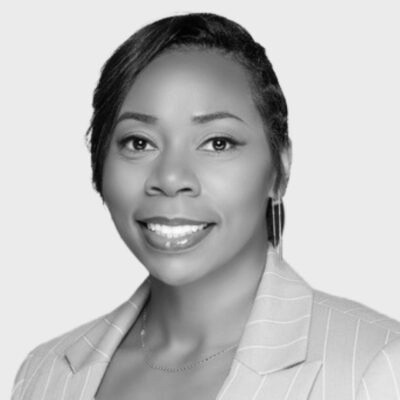
Dr. Shay Harris-Pierre of Continuity Family Business Consulting joins host Cory Gagnon on the Legacy Builders podcast, presented by Beacon Family Office at CI Assante Wealth Management. In this conversation, Dr. Shay and Cory explore how wealth shapes individual identity, autonomy, and family relationships across generations.
- Understand how wealth intensifies family dynamics, raising the stakes on both the risks and the opportunities that come with shared assets
- Learn how the concept of differentiation, drawn from family systems theory, helps rising-generation members develop a healthy sense of self within the family rather than apart from it
- Explore two foundational questions every enterprising family should answer together: What is the wealth for? and Who do I want to be in relationship to this wealth?
- Discover why the fear of raising entitled heirs often produces the very outcomes parents are trying to prevent, and what a culture of empowerment looks like instead
- Hear the three qualities Dr. Shay believes are essential in family enterprise leaders: humility, bravery, and comfort
Welcome to Legacy Builders, strategies for building successful family enterprises. Brought to you by Beacon Family Office at CI Assante Wealth Management Limited. I’m your host, Cory Gagnon, Senior Wealth Advisor. And on this show, we explore global ideas, concepts, and models that help family enterprises better navigate the complexities of family wealth.
Today, we welcome Dr. Shay Harris-Pierre, Senior Consultant with Continuity Family Business Consulting, who works at the intersection of family relationships, wealth, and identity. Shay is a clinically trained consultant and therapist, a Licensed Professional Counselor, and a Certified Financial Therapist with nearly fifteen years of experience helping individuals, couples, and families navigate the emotional dimensions of money. She brings that lens to family enterprise consulting, helping multigenerational families navigate succession, governance, and the relational complexities wealth can create across generations.
My goal is to be the most curious person in today’s conversation with Shay, as we explore how identity, autonomy, and family relationships shape the way people experience wealth. We’ll talk about what happens when inherited expectations meet individual growth, especially as families navigate changing norms across generations and cultures. This is a conversation about finding shared direction while making room for each person to understand who they are, where they belong, and how they contribute.
Now, let’s dive in!
Cory: Welcome, Shay. We’re excited to have you here today to share your wealth of knowledge and experiences with us. Let’s dive in, shall we?
Shay: Yes, let’s.
Cory: Shay, imagine you’re delivering a commencement speech to the graduating class of 2026, and you have the chance to inspire them with your story. How would you begin your speech to convey the incredible lessons and expertise you’ve gained along your career?
Shay: First, I absolutely love that question, and I love that you shared earlier that it’s rooted in Steve Jobs’ speech, his commencement speech, where he speaks about, you can’t connect the dots looking backwards, but you can connect them looking forward. And in my professional story, I reference that often. I think I mentioned that before. I reference that commencement speech very often because all of my experiences on a professional level have been maybe a bit, the spirit, I wouldn’t really be able to outline where I am now based on where I was before. However, I could go through the dots of my professional journey.
But what stands out most to me as a part of my story, and maybe not the most inspirational to others, I know it’s the most inspirational and impactful for me, but the most inspirational dot in my life, actually is a memory that I have from maybe four or five years old when I, I would come home from school, and my dad would, we would have our routine. My dad would go straight to the kitchen. I would go straight to the dining room table, grab my homework, get that out, and set up my little workspace. My dad would grab a piece of fruit from the kitchen. He’d peel an orange, or slice up an apple, or whatever piece of fruit, the snack of the day, and he’d bring that to the table. He’d sit next to me. I would do my homework and eat my fruit. He would help me with my homework. And once I was finished with my homework, I would have a piece of my Halloween candy as a treat. And he would always say, little girl, that’s what he called me, little girl, you’ve got to do what you’ve got to do before you can do what you want to do.
And so it may seem like a random, trivial, if not heartwarming story about a little girl and her dad, but that was one of the most impactful experiences of my life, and for a few reasons. One reason being the lessons I learned from that experience. It wasn’t just a one-off thing. It was our routine. Every day in late fall, I’d come home from school and have my snack, and then I’d have my candy, and then I’d be able to go and play and do whatever I wanted to do once my homework was done.
So I learned the lesson of delayed gratification, which is my father, God rest his soul. I don’t know how intentional he was about teaching that lesson, but just showing up as himself. And he was a very intelligent man. So just showing up as himself, being caring and teaching and leading and guiding like he did, that taught me that lesson, that important life lesson that I carry with me, and have carried with me throughout all of my professional endeavors, my personal endeavors.
Then there’s also the second piece that sticks with me about that story, which is how it solidified my definition of what legacy means. And, of course, at four or five years old, I didn’t really know what legacy actually meant, or had no concept of the word. But as I continued to grow and learn and enter into this space and the family advisory work that I do now, it really solidifies what that really means to me, what legacy actually is. Of course, we speak about the multiple forms of capital, and we know that finances or financial assets aren’t the only thing that people can leave behind. But this particular memory of mine is the embodied experience of Maya Angelou’s quote, which people don’t necessarily remember, and I might butcher it. People don’t necessarily remember what you said or what you did, but they do remember how you made them feel. And for me, remembering how I felt sitting at that table, doing my homework, maybe a little frustrated because I didn’t want to do my homework or I didn’t want to eat a piece of fruit, but I still felt cared for. I felt supported. I felt loved. And that’s what is important. That’s the legacy that my dad instilled in me. That was the seed he planted.
Now, to bring it back full circle, the biggest thing that I take away from that story is the intersection of the personal and professional impact that that experience had on me. Not only did it teach me the lessons from my personal life, delayed gratification and all of those things, and not only did it teach me what legacy actually meant, but it also shaped my identity and how I define identity. So who I am, not only as an individual, not only as a person, but as a professional, is inextricably shaped by that experience and my relationship with my dad. I could go through all of those metaphorical dots that I spoke to in my professional journey, but I really wanted to take the time to highlight the most important dot, which was one of the earliest dots in my life.
And so to answer the question of how I would speak to the graduating class, the inspiration that I would give or the advice that I would give to them would be not to ignore those relational dots, those small moments that feel like they might be trivial or they may not make a huge impact. As long as you’re showing up authentically and being who you are and doing good in the world, you never know the ripples that those moments can have in someone else’s life and how they can shape your own identity and purpose moving forward.
Cory: I love your story. And I think of that intentionality of my work as a parent. How do you see those relationships and those life lessons start to shape out in families? Are they really anchored on those life lessons and they stick? Do you find that the most memorable and impactful ones aren’t by intention or a mix of the two?
Shay: I would probably say a mix. And the question reminds me a bit of my work as a clinician and as a professor, helping master’s or teaching master’s level students how to be clinicians. I would always tell my students, well, actually, I would refer to one of Irving Allam’s books. I think it’s called The Gift of Therapy. I can’t remember. Don’t quote me. But in the book, he shares these different stories of little tidbits, or little client interactions that he’s had over his years of work as a clinician. And, in the book, he notes that, I had these reactions to these moments in therapy, but my clients, when I asked them what was the most memorable piece of our work together or the most salient part of the work that I did with them and for them, it was never about the things that I really did intentionally. I would put the best practices forward and put all of my textbook knowledge to use.
But some of the things that clients really sat with and were most relevant and salient for them were the relational things. The way that he would just sit and be, or one particularly poignant question that he would ask that he wouldn’t think twice about, but just showed his curiosity and care. So I say all that to say that in families, I think the same thing is true, and it also ties back to my story. My dad probably wasn’t, intentionally thinking I’m going to impact the rest of her life, and she’s going to grow into this helping professional because of us sitting down at the dining room table every day to do our homework. That probably wasn’t his intent. But him just being who he was made that lasting impact.
And so in families, yes. Sometimes, the things that you do very intentionally, the structures you put in place, the roles or the rules and boundaries that exist in a family on an overt level may be very helpful, and they often are. But it is also extraordinarily helpful to have just those moments of genuine connection and human relational connection. And those moments can have an impact that you wouldn’t be able to predict.
Cory: I’m super curious about the way that you define identity. You made that comment. Tell me more.
Shay: That’s a really good question. And identity is so multifaceted. I think of Kimberle Crenshaw’s work, in which she speaks about intersectionality. And the concept of intersectionality speaks to how our multiple marginalized identities intersect to create a unique experience of marginalization. But to take it a little bit broader than that, or I guess to back it up a little bit, in order to have multiple marginalized identities, we have to have multiple forms of identities. And so who we are as a person is the intersection of who we are in all of our different communities and cultures. Who I am, racially, gender-wise, socioeconomically, where I live in the country, all of these things influence who I am and how I view myself.
And so I’m not sure if I have a quick and easy definition of identity. I wish I did. But I would say that our identities, to be as brief and as succinct as possible, it’s how we exist within ourselves and how that existence is portrayed to the world around us.
Cory: And so, the work that you do with families of wealth, I’m curious how I view myself and where that shows up in behaviors, relationships, and attitudes. And how does that all work together?
Shay: Absolutely. So when I do a lot of work in the area of wealth integration, which is the process of an individual and a family in understanding what their purpose is for their shared wealth or the wealth that they have. And a big piece of that work is understanding and building your identity, your sense of purpose, and your sense of mattering. How do you matter in this world? And that is the intersection of all three of those things is the meaning that we make of our lives and the meaning that influences what we do with our wealth. I think I lost your question.
Cory: How I view myself. So where does that fit in?
Shay: Yes. And so how I view myself, that’s the identity piece. Without a sense of identity or who I am, when that feels threatened, it can cause an untetheredness, especially in families of wealth. Specifically, with families of wealth, wealth creates conflict, not complications. Let me sketch that. Wealth adds a level of complexity to individuals and their families. And with that complexity comes a challenge in understanding one’s identity in their relationship, again, to themselves and to others.
So I’ll give a generic kind of hypothetical. One person in a family, let’s say a legacy family, a dynastic family with a very well-recognized last name, that person is born with an identity already ascribed to them. They are so and so’s great, great, great, great, grand person. And what comes with that is expectation. There’s weight. There’s pressure. And the process of wealth integration helps people in the sense of people who may struggle with that weight. It helps them to author and have a little bit of autonomy around what that means to them, what that weight means to them. They’re thereby helping them to develop their own identity within the family system and separate from the family system, not in a completely estranged sort of way, but in a differentiated way, a healthy differentiation.
So wealth integration helps people to understand what their identity is as an individual, what that means, given the context of who they are within their family, and given the context of who they are with their wealth.
Cory: Can you help speak to the listeners and help them understand what differentiation means and how they can identify their level of differentiation?
Shay: Sure. So differentiation is actually a Bowenian concept, Murray Bowen being one of the founding theoretical powerhouses in family systems work and family systems theory. And Murray Bowen’s, transgenerational or family systems theory highlights the importance or the connectedness between how messages, behaviors, culture, all kinds of things, are passed down across generations within family systems. Very relevant to family advisory work, and just very relevant to any work with families in general.
And so one of Murray Bowen’s main concepts in the theory is the concept of differentiation. When a person in a family system, they have the opportunity to either fully be enmeshed within that system, and that often requires a forfeiture of their autonomy. Sometimes in some family cultures, that’s the expectation and that’s the norm. In other family cultures, maybe more individualistic cultures, that may not be the expectation or it may not be the norm. And individuals may struggle with developing their own autonomously authored sense of self.
And so the process of different differentiation is not the opposite of enmeshment. It’s not taking oneself completely out of the family system. Rather, it’s developing a level of understanding of oneself, and confidence and groundedness in oneself outside of the family, in a way that then allows the person to contribute to the family system in a helpful way. And when we overlay that in the family advisory work and wealth being that multiplier or magnifier, what does that add to the dynamic and the systems that play? With wealth being a magnifier, the risks and challenges are often exponential. And differentiation, or a lack thereof, can have exponentially large consequences if not attended to.
In a family system where there’s enmeshment and a lack of differentiation, there may be a lot of conflict due to underlying resentment around that lack of differentiation, and maybe a desire by individual members to have a level of autonomy that the family system won’t allow for. And that also may show up more concretely in trust structures or governance structures that are unchangeable or unadaptable if necessary, for the sake of individuals who would like to contribute to those things.
Cory: I’m curious that you’ve used the word autonomy a few times. And I think of that power that’s either explicitly there, or maybe implicitly applied through systems. How do we understand the level of autonomy? And I’m sure it’s not a measure across the whole system. It’s probably on a relationship-by-relationship basis. But how do we assess that if we’re either from the inside looking around, or from the outside looking in?
Shay: Now, let me make sure I’m understanding the question. The question is how either within or outside of a system, do you assess the level of autonomy that exists?
Cory: Yes. Like me as an observer, or maybe bringing myself into the system, or maybe I’m a family member, and I’m within, and I’m looking around, saying, how much autonomy do we really have?
Shay: Okay. I think that in order to answer that question, I might have to put my professor hat on for just a second.
So when we think about family systems, and when we think about families, family culture and what is adaptive or maladaptive, it’s important to remember that each family has their own set of rules, roles, norms, and beliefs. The hierarchy in each family is going to look different, and the level of autonomy in each family is going to look different. So when you’re thinking about from the outside looking in, the first thing to be mindful of, before assessing level of autonomy, or assessing positive or negative, adaptive or maladaptive in any way, is understanding the system in itself, getting a lay of the land. What are the norms? Is it within the family culture? Is it acceptable or expected that more family members behave in a certain way? Some, just off the top of the head, that family members just show up to one another’s houses unannounced, or have a huge say in who one person marries in the family, or big life decisions. Some families have rules or expectations. That’s the norm within that family. And that doesn’t necessarily mean that it’s right or wrong. It just means that that’s what it is for that family.
So when we think about autonomy, given those examples that I gave, some people may, from the outside looking in, say, no. The person who can’t choose their spouse doesn’t have a high level of autonomy. And that without proper understanding of the context, which may or may not be accurate. Some families may shift into, they may have norms in the system that prevent autonomy in some individuals. But if those norms are not, by definition of the family, maladaptive And if they’re not hurting anyone in the family, then we wouldn’t want to make that assumption.
Now, on an internal level, if I’m inside of a family, that’s a pretty personal definition. And again, it’s going to be shaped by my upbringing, my family norms, what I expect as a baseline level of autonomy, or how I define autonomy in general. And so if I am in a family system that defines autonomy as being able to author my own story and make my own choices. And throughout childhood, when developmentally appropriate, I was given a level of autonomy to tie my own shoes and choose my own outfits growing up. But then I get to a point where I’m an adult, and I can’t make decisions about my own estate plan because I don’t have the information necessary from my parents, then I am losing a bit of autonomy. And in the context of this family that values autonomy, autonomy looks like being able to make decisions for yourself. If I am no longer able to make a decision for myself, then my autonomy is lacking. I hope that makes sense.
Cory: That’s excellent. As you were saying, going back to our conversation around intentionality and family norms. Did we give the right amount of autonomy, developmentally and through life to be congruent with some of our actions and decisions, when somebody becomes an adult, and they say, I should have full autonomy now because I’m an adult, and they realize I don’t?
Shay: Absolutely. When there’s that mismatch of things like an expectation and a reality, when there’s that chasm between those two, especially in families, conflict can ensue, and lots of challenges to one’s identity and one’s reality and what actually makes sense. Those things can be really challenged.
Cory: I think of those family norms and culture within the family, and then some of the cultural developments, depending on where the family is, geographically, or some of those influences. And so many families are spread across the world. And so as people are saying, I believe that our family norms need to evolve, and here’s what’s important to me. Where do you see those shifts in family systems that are supported? And then how do we keep that sense of who we are amongst some of those desired changes?
Shay: I think the point you raised about families becoming more and more global is so salient, so important. Because not only in multigenerational families are families now having to have conversations, or how having to face differences generationally, and communication styles, or values that change across generations, but they’re also now having to navigate different levels of culture on a global scale.
I believe it’s Grubman and Jaffe that wrote a book called Cross Cultures. Excellent piece of work. And it speaks to three main global cultures. There’s the individualistic culture, there’s the honor culture, and there is collective harmony culture. And that’s rooted in psychological literature, social psychology. And when families, let’s say an Asian family, deeply rooted multiple generations in Asia, which is a collective harmony, most countries on the continent of Asia are collective harmony countries. And so they send their college-aged, rising gen members or generation to the UK or to Australia or the US, even for school, there’s a huge culture clash between the individualistic culture of the US or the UK, and the collective harmony culture in Asian countries. And the same is true for honor cultures. There’s a huge difference between, kind of the foundational pieces of each of those cultures. And so the people, the younger generation that goes and experiences a different culture, may come back to the family with a different understanding, with just a different perspective.
Recently, I served for Cornell’s family business school’s mentor program. And there were quite a few students whose families sent them to Cornell specifically. There were global students from families across the world, and they were sent to Cornell to get a new perspective. And some of the feedback that they were asking for, the advice that they were asking for, was specifically to this point. How do I go back now with what I’ve learned and integrate these new ideas into my family system that has operated a certain way for generations now? How do I go in and kind of disrupt the system?
And that’s where these conversations about having these, not only cross-generational conversations, but also cross-cultural conversations, and having the capacity to have these conversations without dismissing or completely writing off certain things as wrong. But having a level of open-mindedness around those things, that can be the first step in really creating a lasting legacy and integrating those new ideas.
Cory: And so learning from those experiences and bringing those back, or even digesting how that fits with somebody’s other beliefs. So thinking of self, and I’ve experienced this new way of thinking, how can that individual first think about their thinking and how they are integrating that in, and then how can the family integrate that in a way that is truly honoring what it is that I’ve known, and saying, does this serve me?
Shay: Yes. I’ve spoken to the importance of it, and I haven’t really spoken to the process of it. It’s an identity development on the individual level. When that student leaves their home country, travels to another country, is immersed in different cultural norms, and learns more about themselves, about the world, about other people, that in itself is a process. It’s an immersion. It’s an immersive experience. And it’s hard to pinpoint exactly what happens in that process. And there are a lot of identity development models out there that can shed some light on some of the processes as they happen. But in essence, it’s an immersion. And the most important piece is going to be how it’s integrated.
I think they also speak about this in Cross Cultures, or no, it’s Strangers in Paradise. If there is a hesitance to acclimate or a resistance to learning more about the new culture, then that limits the individual from learning more about themselves and learning about the culture. But then also, on the other end of that of that spectrum, if there’s a complete abandonment of their heritage culture, that can also serve as a challenge, especially when you, as the individual, try to go back into your family of origin, or your family business, or anything like that, because then there’s that disconnect.
So the ideal action, or the ideal direction, would be integrating, figuring out what pieces work, what pieces build upon those foundational values and beliefs from your family of origin, from your heritage culture, the things that are a part of who you are, and the things that you want to continue to grow. And also, being able to discern what parts of this new culture maybe don’t necessarily match, because it may not match. And that’s okay. It doesn’t mean that one or the other is wrong. It just may not be a fit.
And so that integration process involves a lot of understanding who you are as an individual, where you’re coming from, what values and beliefs you hold, and what values and beliefs you want to build, and being intentional about how you bring the things, take with you what works, and leave the rest for someone else to take.
Cory: You made the comment of developing that shared purpose. And I wonder where that fits into the journey?
Shay: Similar to what we were just talking about as far as taking what makes sense and what fits, and leaving what doesn’t. As families create shared purpose with one another and shared purpose for their wealth, that’s a piece of the puzzle too. Understanding the myriad opportunities that wealth creates and that wealth affords, and being selective and intentional about which opportunities or which directions the family wants to go, and how that shared purpose can be beneficial, again, for the family itself, as a system, as an entity, but also for the individuals within the family.
And even through that process of creating that shared purpose, creating that shared direction, it involves that integration of everyone’s ideas, their perspectives, the things that they value. A family doesn’t create a values list with one person. I mean, they might. Some of them might. But I imagine that when families create constitutions or mission, vision, value statements, there are multiple people in the room. And that’s because the family isn’t creating the vision for the family’s future unilaterally. They want the next generations, they want the family as a whole to agree and to be on board with where this proverbial train is going.
Cory: Shay, I want to stop for a second, make sure before I transition us that there’s nothing else on your list that we need to talk about.
Shay: No. I think we’re good. If we move into the last three questions, I think we’ll get everything.
Cory: Shay, as we near the end of our conversation, there’s a few questions I ask each guest before we wrap up. Are you ready for the tough ones?
Shay: I think so. No, I’m ready.
Cory: Good. What is one key strategy you believe is most essential for building a successful family enterprise?
Shay: I love this question, and it actually kind of picks up exactly where I left off with the train metaphor in what I was just saying. So in a generic sense, I would say that the key strategy is going to be knowing the direction before you lay the tracks. Now I’ll explain what I mean by that. A lot of times, families will, and wealth creators specifically and rightfully so, will lay those tracks of wealth creation, building the wealth for the sake of building it. They’ll preserve the wealth for the sake of preserving it. And again, rightfully so, if the wealth isn’t built, then there is no financial wealth to pass on. However, that can really lead a family kind of in circles, or to a destination that doesn’t really fit with who the family is, and how they see themselves in the world.
So to make it a bit more concrete and answer your question, one key strategy for families would be to ask two questions. The first question is, what is the wealth for? That is, in this metaphor, what is the direction that we’re laying these train tracks? Where are we trying to go? It doesn’t necessarily need to be a destination, because it never will be a destination. It’ll be a direction, though. There may be some stops that you need to make along the way to help certain people in the community, or you want to go through certain parts of the world to make sure that the wealth is doing what it needs to do or what your family wants it to do. But in answering that first question of what the wealth is for, that gives some insight into the direction of where we’re going when we lay these tracks.
Then the second question is both for the individual and for the family system. And that is, who do I want to be in relationship to this wealth? Now, individually, that’s a process. That’s the wealth integration process. Understanding who you are within the context of your family system and the shared wealth that exists in your family. And then as a family, building that understanding of who are we, who is this family in relationship to the wealth, that again, solidifies and gives direction to how the family is moving forward.
Now those things, like answering those questions, it’s not a brief journal prompt. Those aren’t things that you could just answer in a page and a half of journaling. It’s a process. It takes a lot of self-reflection, family reflection, understanding of the system, the family system, the shared wealth system, and how all of those things interact to create dynamics and facilitate and foster dynamics that are either conducive to some of that autonomy we spoke to earlier, or are not conducive to some of the things that may help the family to thrive. So answering those questions, it serves as like creating the map. I’m full of metaphors today, but it’s almost like creating the map that is helping the family to decide, or helping the family to determine the direction and the purpose for the family so that they can use the wealth for that purpose, and not let the wealth drive the who would be the conductor of the metaphorical train.
Cory: Amazing. And what is the most common challenge that you see family enterprises encountering when it comes to wealth transition and generational continuity?
Shay: I’m tripping over my words because I have so many words, and I want to put them all together. If I had a nickel for every time I had a family member, a parent, or someone ask me, or say to me, I don’t want my kids to be entitled, I want to make sure that they work hard, and all of those things, I would be a pretty wealthy person. But what it shows to me every time I’m asked that question, or where every time that statement has come up for me, it makes me wonder or think about the idea that that statement in itself is coming from a reactionary place. It’s rooted in a threat response. And the threat is to their children. I don’t want this wealth to entitle my children, so I have to protect them. And oftentimes this is the challenge. Oftentimes, in protecting their children from this entitlement monster, parents may fall into certain patterns that may inadvertently lead to their children being confused about their wealth, or feeling controlled by it. Sometimes it may even come full circle and they end up feeling entitled by it anyway.
And so a lot of the work that I’ve done with families has been to come out of those sand traps of confusion, controlling, or entitlement, and foster a culture of empowerment for children, for not necessarily children, but for the rising generations, and for the parents’ children. This concept is articulated very well in an article that’s in, I believe, the Family Office Journal by Doug Baumel, Blair Tripp, and I believe it’s called the Progenitor’s Dilemma. If anyone listening wants to go and check it out, there’s a lot more information on that concept in the framework. But in essence, because the question is, what’s the common challenge? The common challenge is trying to avoid entitlement, and in essence, doing or creating dynamics that are also not really helpful in the family. And so how to overcome that involves improving the quality and quantity of messaging around wealth transfer. And how often they talk about it, how clearly and how directly they talk about wealth transfer, helps to foster that culture of empowerment.
And then also the rate of transfer. How much is being given? Going back to the example I gave earlier, how clear is the transfer itself? So how can a rising gen person plan their lives if they have clarity around how much is coming, or what they can do within their trust structures and within the governance documents that exist, and what they own. If there’s clarity around that, they’re able to be empowered to have the autonomy to author and build their lives the way that they want to. So increasing the messaging, being clear and direct in that messaging, and also increasing clarity and understanding around what that rate of transfer looks like too.
Cory: And in your experience, what are the top three key qualities that successful family enterprise leaders possess?
Shay: So I know you’ve had a lot of episodes of this podcast, and I’m sure you’ve had a lot of answers to this question. And I know that there have been so many great qualities that have come from those answers. And I wonder if what I share is going to be any different. I don’t know, but we’ll see.
So, as we spoke earlier about the differences in generational culture and communication across generations, and even global cultures and the diversity of cultures that exist in families, it makes me think about a concept in the psychotherapy literature, and it’s called multicultural orientation. Now, in the counseling literature, it speaks directly to how clinicians can show up in a culturally sensitive way with their clients, because no one is going to be exactly like you in all of your forms of identity when you sit across from them as their therapist. And so it’s important to have a level of sensitivity to their experiences and curiosity.
When I think about family enterprise leaders, I think of people who have a huge capacity and skill set in multicultural orientation. So to break it down into three specific qualities, there are three pillars of multicultural orientation that I think fit extraordinarily well with this.
So the first one is humility, and that’s just simply the ability and the capacity to be open-minded and open to new experiences and perspectives, which is extremely important in family enterprises for the reasons that we’ve talked about. Often, businesses, enterprises, families with shared wealth, everything is dynamic, and things are shifting all of the time. And so, ingenuity, new things, new concepts, and new perspectives need to be integrated into the family to foster longevity and survival, so that humility for a leader is extremely important. And, again, humility is that openness to new ideas. The second one is bravery.
Now, bravery, when I say bravery, I’m thinking of the firefighter who’s running into the building. This is the person, or this is the quality of having the ability and the bravery to have tough conversations, to not shy away from things that are uncomfortable. Leaders, especially leaders in family enterprise, need to have that level of bravery to be direct in how they speak to differences or challenges or concerns as they arrive. And they need to be brave enough to face the difficulties that will inevitably show up in family-run enterprises.
Then that third one is comfort. And it ties in with that bravery piece, where if you’re brave enough to have these conversations, you also need to project a level of comfort and groundedness to allow these conversations to happen without escalating. So the comfortable leader, the leader who shows a high level of comfort, is able to, again, show up fully grounded in their conversations with others in the family enterprise, the people who are in the family and in the business, the people who are not in the business or not in the family, but in the business. And that groundedness looks like not allowing their own emotional reactions to flood or interfere with or distract from the actual point at hand when you’re having difficult conversations. And I would say that that comfort is probably the most important characteristic when considering mitigating family conflict or mitigating the potential for conflict in family and family-enterprising systems.
Cory: Wow. I can see that on the clinical side of where those fit, and I can see that so well in everyday life, and leaders and being emotionally intelligent humans. That’s great. Love it.
Shay: Thanks.
Cory: And before we conclude, I’d like to highlight where listeners can engage in more of the conversations you’re having, as well as any other wonderful things you’ve referenced, great books and articles and things, but anything else that might be useful to our audience?
Shay: Absolutely. So, for more insights or things from me, you can check out harrishereconsulting.com. Also, feel free to connect with me on LinkedIn if you just Google my name or search my name. Also, something exciting in the works for me is that I am leading Continuity’s Center for Wealth Integration. We will be launching the Center for Wealth Integration and our wealth integration services in the very near future, in a week or so. So I’m very excited to be leading that effort to be at the forefront of having these conversations and facilitating these conversations with families that are at the root of and influence all of their other advisory relationships and the conversations that are had in building some of these more tangible structures in dynastic families.
Cory: Fantastic. And I wanted to make sure we covered everything. Is there anything else that you’d like to touch on, that we didn’t explore?
Shay: I don’t think so. I think we did. I think we did it.
Cory: Alright. Well, thank you, Shay, for showing up with so much expertise, experience, and stories. Loved your metaphors. There’s never too many of those. So thank you so much for your contribution.
Shay: Thank you so much for having me. I’m always full of metaphors, so it’s a great way to illustrate a point.
As we wrap up this episode, we invite you to reflect on Shay’s reminder that wealth can bring questions of identity into everyday family life. The way a person understands their place in the family can influence how they engage with responsibility, decision-making, and the expectations that come with legacy.
Whether you’re part of a family enterprise or walk alongside one, this conversation points to the value of understanding how much room people have to become themselves within the family system. When families can make space for individual identity while staying connected to a shared direction, they create stronger ground for trust across generations.
Throughout our conversation, Shay helped bring forward the deeper questions that sit beneath many family wealth conversations. She invited us to consider what it means to have a sense of self within a family system, and how autonomy can shape the way people participate in shared decisions. Her perspective reminds us that wealth integration is as much about understanding people and relationships as it is about planning for the future.
Keep Reading…








Stay in the Know
Get our latest articles, tips, and insights delivered straight to your inbox.
"*" indicates required fields